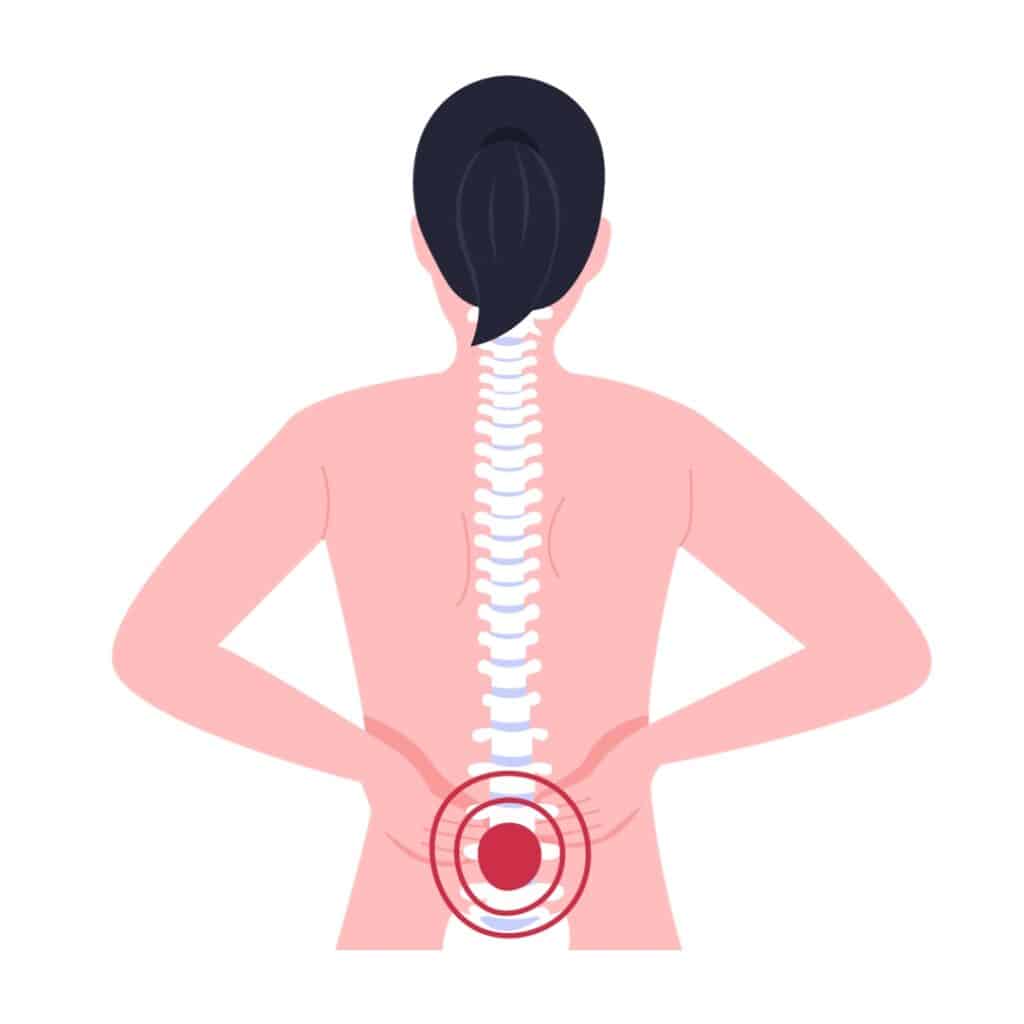
BACK PAIN
You might be experiencing this if… your back aches after sitting at a desk all day, you struggle to get comfortable at night, or a sudden movement left you unable to stand up straight.
Back pain is one of the most common reasons people seek physiotherapy — and one of the most misunderstood. Research consistently shows that staying active, rather than resting, leads to better outcomes, and that hands-on treatment combined with exercise and education is among the most effective approaches for both acute and chronic back pain. At Santia Loubser Physiotherapy, we assess the root cause of your pain rather than treating the symptom alone — identifying contributing factors like range of motion and mobility deficits, movement patterns, strength deficits and posture — and build a plan that gets you moving with confidence again.
 NECK PAIN
You might be experiencing this if… you wake up stiff, struggle to check your blind spot while driving, or find your neck and shoulders tightening up after hours at a screen.
Neck pain is increasingly common in a world built around screens and sedentary work — and it rarely resolves on its own without addressing the underlying cause. Evidence supports a combination of manual therapy, targeted exercise and postural correction as the most effective treatment approach. We assess your cervical spine, surrounding musculature and movement patterns to understand what’s driving your pain, and work with you to both relieve it and prevent it from coming back.
CERVICOGENIC HEADACHES
You might be experiencing this if… your headaches seem to start at the base of your skull or neck, are worse after prolonged sitting or screen use, or accompany neck stiffness and reduced movement.
Not all headaches originate in the head. Cervicogenic headaches — headaches that arise from dysfunction in the cervical spine — account for up to 20% of all chronic headaches, yet are frequently misdiagnosed. Research shows that a combination of manual therapy, cervical mobilisation and targeted neck and shoulder strengthening exercises is highly effective in reducing both the frequency and intensity of these headaches. If you’ve been managing headaches with pain medication without lasting relief, a physiotherapy assessment may identify a treatable mechanical cause.
SHOULDER INJURIES
You might be experiencing this if… you can’t lift your arm above your head without pain, your shoulder aches at night, or you’ve been told you have rotator cuff problems or a frozen shoulder.
The shoulder is the most mobile joint in the body — and that mobility comes at the cost of stability, making it vulnerable to injury. Whether you’re dealing with rotator cuff pathology, impingement, instability or a frozen shoulder, a thorough assessment is essential to understand exactly what’s involved before treatment begins. We use hands-on techniques to restore range of motion and reduce pain, alongside a progressive strengthening programme to rebuild the stability and function your shoulder needs for daily life and sport.
ELBOW & WRIST INJURIES
You might be experiencing this if… the outside of your elbow aches after gripping or lifting, your wrist is painful after repetitive tasks, or you’re experiencing tingling into your hand or fingers.
Elbow and wrist injuries are common in both athletes and desk workers — from tennis elbow and golfer’s elbow to repetitive strain injuries and wrist pain from prolonged typing or mouse use. These conditions respond well to physiotherapy when properly diagnosed and treated. We identify the specific structure involved, address any contributing factors in load, technique or posture, and progress you through a rehabilitation plan that restores strength and function without prolonging your symptoms.
KNEE INJURIES
You might be experiencing this if… your knee swells after activity, aches when climbing stairs, clicks or gives way unpredictably, or has been painful since a specific incident.
The knee is a complex joint that absorbs significant load during everyday movement and sport. Conditions like patellofemoral pain, ligament injuries, meniscal problems and IT band syndrome are all common — and all respond well to physiotherapy when the biomechanical picture is properly understood. Treatment focuses not just on the knee itself but on the hip strength, movement patterns and muscle coordination that influence how your knee functions, reducing both pain and the risk of reinjury.
ANKLE & FOOT INJURIES
You might be experiencing this if… your ankle was sprained and hasn’t felt quite right since, you have pain under your heel first thing in the morning, or the ball of your foot aches after running or long periods on your feet.
Ankle sprains are among the most common injuries — and among the most undertreated. Research shows that inadequate rehabilitation significantly increases the risk of reinjury and long-term instability. We treat acute ankle injuries through to chronic foot conditions like plantar fasciitis, Achilles tendinopathy and metatarsal pain, using manual therapy, progressive loading and balance retraining to restore full function and confidence in the ankle and foot.
SPORTS & RUNNING INJURIES
You might be experiencing this if… you’ve been sidelined by a muscle strain, your knee or shin hurts when you run, you keep getting the same injury, or you’re building back from a significant sports injury.
Sports and running injuries require more than rest — they require understanding. Whether you’ve sustained an acute injury or developed an overuse condition from training load, the key to a successful return to sport lies in identifying why the injury happened, not just treating where it hurts. We assess your movement patterns, training habits and biomechanics to build a rehabilitation plan that gets you back to full activity — and reduces the risk of the same injury recurring. From UCT student athletes to weekend trail runners and competitive endurance athletes, we understand what it takes to return to sport properly.
POST-SURGICAL REHABILITATION
You might be experiencing this if… you’ve recently had surgery on your knee, shoulder, back or another joint and need structured rehabilitation to support your recovery.
Surgery addresses a structural problem — rehabilitation restores function. The quality of your post-surgical recovery has a direct impact on your long-term outcome, and current evidence strongly supports early, progressive movement as a key driver of successful recovery. As a first-line physiotherapy practitioner, we use clinical expertise, knowledge of tissue healing and up-to-date evidence to guide your rehabilitation safely and purposefully — progressing you at a pace that challenges your recovery without compromising it. The goal is a full return to function, not just a healed scar.
CHRONIC PAIN
You might be experiencing this if… you’ve been in pain for months or years, previous treatment hasn’t given you lasting relief, or your pain seems to have taken on a life of its own.
Chronic pain is complex — and it deserves to be treated that way. Current pain science tells us that pain persisting beyond tissue healing is influenced by a range of factors including the nervous system, sleep, stress, movement habits and the meaning a person attributes to their pain. Effective physiotherapy for chronic pain goes beyond hands-on treatment to include education, graded activity and building your confidence and capacity to move. Understanding your pain is often the first and most powerful step toward changing it.
WORKPLACE & POSTURAL INJURIES
You might be experiencing this if… you spend most of your day at a desk and your neck, back or shoulders are paying the price — or you’re in a physically demanding job and your body is struggling to keep up.
Work-related pain is one of the most common reasons people seek physiotherapy in Cape Town — and one of the most preventable. Whether you’re dealing with the consequences of prolonged sitting, poor workstation setup or the physical demands of a labour-intensive role, physiotherapy offers both treatment and practical solutions. We assess not just your body but how you use it, and provide targeted treatment, postural correction, strengthening and education to relieve your current pain and help you work without it.
